Bodily modification and biological grafting
The RookBodily modification and biological grafting are central to the Grafters’ program of turning ordinary human bodies into specialized instruments and preserving knowledge beyond an individual lifespan. The methods range from extensive intervention in a child’s development to the cultivation of a new body from a sample of the heart; in the account given to Myfanwy, both are entwined with the Grafters’ political survival and their covert operation at Camp Caius.
Methods and engineered abilities
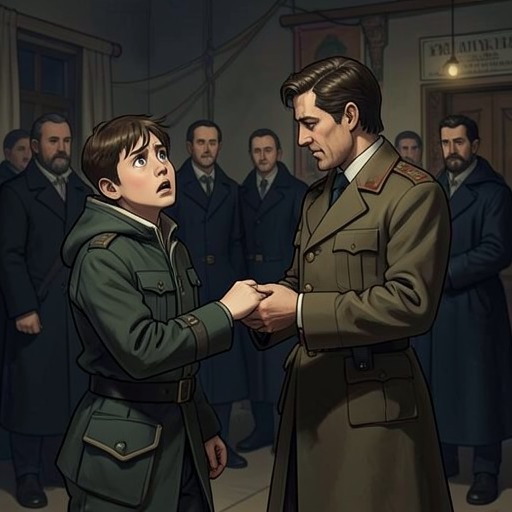
Norman is presented as a product of Camp Caius, where a child described as initially ordinary was extensively modified as he grew. The procedures included repeated medical interventions, daily injections, the addition of an internal network of canals and reservoirs, protective material incorporated into the skin, and new bodily structures. The account is deliberately matter-of-fact about the process, but Myfanwy’s horrified reaction marks the distance between the technical description and its human cost. Norman, by contrast, remains unperturbed as the modifications are listed.
The purpose of the work is made explicit in its result: Norman is a soldier with a narrow but consequential set of abilities. Physical contact allows him to exert basic control over another person’s brain, including rendering someone unconscious or stopping them from activating their powers. More intimate contact allows finer intervention, including effects on memory. His capabilities are therefore not presented as an innate gift alone; they are linked to a program of bodily engineering designed to produce a useful operative.
Camp Caius and covert power
The procedures are part of a broader operation rather than an isolated experiment. A Belgian Grafter tells Myfanwy that, over several decades, the Wetenschappelijk Broederschap van Natuurkundigen had maneuvered into positions of power within the Checquy. The group had also established a training and experimentation program, funded by Britain, that forcibly drafted British citizens as soldiers. Camp Caius belongs to this network of institutional influence and human experimentation.
The account ties the program’s reach to the Grafter’s own role: he says he directed acquisition and indoctrination, personally oversaw Camp Caius, and developed and placed a fungal weapon capable of subjugating people and spreading across large areas once activated. These details broaden the meaning of bodily modification in the story. It is not only a means of changing an individual body; it is one component of a covert military and political project operating inside the Checquy.
Regeneration and preserved memory
Biological engineering also offers the Grafters a way to continue after bodily death. One account describes how they survived the Checquy’s counterstrike despite losing estates, resources, key experiments, and skilled practitioners. The speaker and Gerd had already moved into new bodies when they watched their former bodies die. They later left the scene and continued their lives, making replacement bodies part of the group’s survival strategy rather than a one-time medical intervention.
The mechanism is described through the growth of a body from a sample of the heart. The resulting person retains the memories held at the time the sample was taken, although the account also distinguishes this process from surgical enhancement: the reborn person may select a couple of abilities, but these do not match what the Grafters can provide through surgery, and the process carries risks. Regeneration thus preserves memory while allowing some choice in the capacities of the new body, without making the transition entirely predictable.
Significance
Across these examples, the body becomes both a site of technical intervention and a means of organizational continuity. Norman’s abilities show how modification can make a person more effective as a soldier; the regeneration account shows how a body can be replaced while memories persist; and Camp Caius places these practices within a state-funded program hidden inside the Checquy. Together, they portray biological grafting as a system that joins individual transformation to institutional power, while leaving a distinction between what surgery can impose and what regeneration allows its subject to choose.